The Method Line Matters: What HPLC and GC Certificates Actually Prove About UK CBD
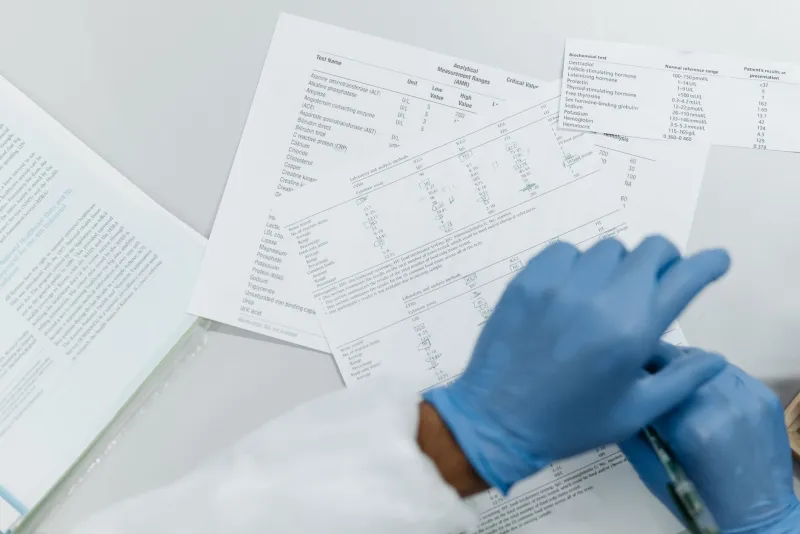
A certificate of analysis is often presented as a single verdict: the oil passed, the potency is confirmed, the purity claim stands. That framing is convenient, but it skips the most important part of the document. The method line on a UK CBD lab report defines the boundaries of what the test could actually prove. Two laboratories can analyse the same oil and report different potency figures without either being dishonest. The difference may sit in the sample preparation, the instrument, the detector, the calibration standard or the limit of quantification. For a buyer trying to judge purity and transparency, the method line is not housekeeping. It is the evidence behind the evidence.
Why the method line is more than a technical footnote
A certificate that says only HPLC or GC has told you the broad category of the technique, not the method. A useful method description should identify the instrument, the detector, the column or separation approach, the sample preparation, the reference standards, the wavelength or ion monitoring mode where relevant, and the limit of quantification. Without those details, the result is difficult to interpret and almost impossible to reproduce. Saying a sample was tested by HPLC is a little like saying a distance was measured with a ruler: it indicates the tool, not the accuracy, the units or the conditions.
This matters because a CBD product is not a single, simple measurement. The oil contains cannabinoids, carrier oils, possibly terpenes, flavourings and trace contaminants. The method determines whether the reported figure speaks to CBD alone, total cannabinoids, or an estimate derived from a particular calibration. It also determines whether the laboratory could see the acid form of CBD, CBDA, separately from the neutral form. That distinction can change what the number on the certificate means for the label on the bottle.
HPLC and GC: different windows on the same sample
High-performance liquid chromatography separates compounds in liquid at relatively low temperatures. In cannabinoid testing it is often paired with ultraviolet or diode-array detection, and sometimes with mass spectrometry for confirmation. HPLC is generally well suited to measuring acid cannabinoids such as CBDA alongside neutral CBD, provided the method and standards are appropriate.
Gas chromatography vaporises the sample and separates the components in a carrier gas. It is widely used for cannabinoids and is often paired with a flame ionisation detector or a mass spectrometer. The technique is well established, but heat is part of the process. In a hot inlet, CBDA can decarboxylate to CBD. If the method does not account for that conversion, a GC result may report a higher CBD figure than an HPLC method would, not because the oil contains more CBD, but because the acid form was converted during analysis. A well-designed GC method can still be fit for purpose, especially where the sample is derivatised or the conversion is controlled and explained. The point for a UK buyer is not that one technique is inherently better. The point is that the certificate should tell you which technique was used and how the laboratory handled the cannabinoid forms.
If a report says GC and lists only CBD, it is reasonable to ask whether CBDA was measured separately, converted or simply not reported. If a report says HPLC but gives no detector or wavelength, you cannot tell whether the method was selective enough for the claim being made. The method line should answer those questions before the potency figure is treated as settled.
Detection limits and the difference between none detected and zero
Purity claims often depend on what was not found. Pesticides, heavy metals, solvents and microbiology results are frequently summarised as passes or as not detected. The method line should include a limit of detection or, more usefully, a limit of quantification. A pesticide panel with a quantification limit of 0.1 mg/kg cannot prove the absence of a substance below that level. It can only show that the substance was not found above the method's limit. That is a meaningful result, but it is not the same as zero.
The same logic applies to potency. A method with a high lower limit may produce a broad result for a low-strength product. Measurement uncertainty also matters. Two laboratories may report 48.2 mg/ml and 44.7 mg/ml for the same oil because their methods, sample handling and uncertainty ranges differ. If the uncertainty ranges overlap, the figures may not be as far apart as they first appear. A certificate that omits the limit of quantification and uncertainty leaves the buyer unable to judge how much weight the number can bear.
Accreditation: the logo is the start, not the conclusion
In the UK, laboratories often display UKAS accreditation to ISO/IEC 17025. That accreditation is valuable because it indicates competence for specific tests, but it is not a blanket endorsement of every result on the certificate. Accreditation is granted for defined methods and analytes within a laboratory's scope. A report may carry a UKAS logo while some tests on the page fall outside the accredited schedule.
A buyer can check the laboratory's accreditation schedule and look for the method reference or analyte in question. If the certificate names no laboratory, no report number and no method reference, the accreditation claim is difficult to verify. This does not automatically make the result false. It does make the evidence weaker. Accreditation should be treated as a starting point for verification, not as a substitute for reading the method line.
A practical checklist for reading the method line
Before accepting a purity or potency claim, look for the following details on the certificate:
- The instrument and detector used for the cannabinoid result.
- The sample preparation and, where relevant, whether CBDA was measured separately.
- The reference standards and calibration approach.
- The limit of quantification for each analyte.
- The method reference and whether it appears within the laboratory's accreditation scope.
- A chromatogram or raw data reference that connects the result to the sample.
- The laboratory name, report number and date of analysis.
- A clear link between the certificate and the batch being sold.
A certificate can look dense and technical while still being evidentially thin. HPLC with no detector, GC with no sample preparation detail, accredited with no schedule reference, or not detected with no limit of quantification are all examples of presentation outrunning proof. The report may not be misleading in intent, but it leaves the buyer without the information needed to evaluate the claim.
Questions to put to a UK brand before trusting a purity claim
A reputable brand should be able to answer reasonable questions about its analytical evidence. Ask which method was used for the CBD figure and which detector was employed. Ask whether that method sits within the laboratory's UKAS accreditation schedule. Ask what the limit of quantification was for each analyte and whether CBDA and other cannabinoids were measured separately. Ask for the chromatogram or method reference, and ask how the certificate is tied to the batch and container being sold. If two laboratories have reported different figures, ask what the measurement uncertainty is and whether the methods are directly comparable.
Not every brand will publish every detail on its website, but a transparent brand should be willing to explain the method or point to a laboratory that can. A potency number without a method is a marketing figure. A potency number with a method, a limit of quantification and a verifiable accreditation scope is evidence. In the UK CBD market, buyers who understand that difference are better placed to reward the brands that treat lab testing as proof rather than decoration.