A Place on the Register Is Not a Purity Test: How UK CBD Buyers Should Read Novel Food Status
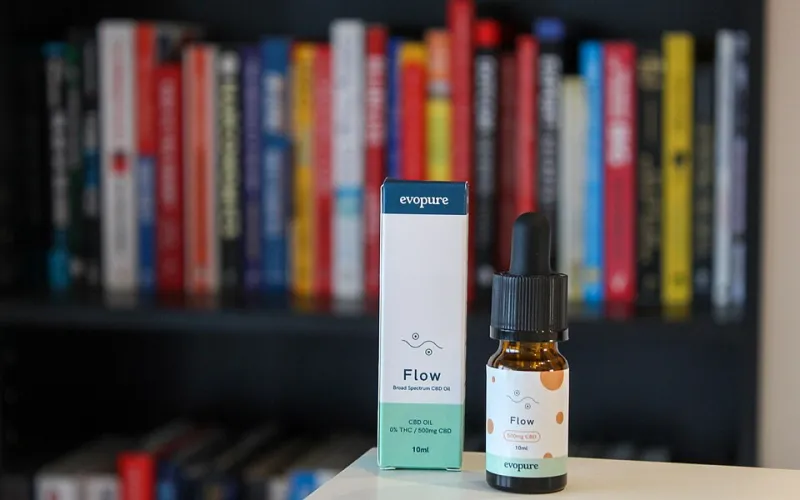
Photo: Evopure, CC BY-SA 2.0, via Wikimedia Commons
In 2026, references to the Food Standards Agency (FSA) are among the most common credibility signals on UK CBD packaging and product pages. A brand may state that its product is ‘on the FSA list’, display a registration-style graphic, or describe itself as ‘novel food compliant’. Such statements can be relevant, but they are frequently presented as though they certify purity, potency or batch-level quality. They do not.
The confusion matters because CBD is treated as a novel food in the UK. Novel food status relates to the regulatory assessment of the ingredient and the application process, not to a guarantee that every bottle sold under a brand name has been tested to a consistent standard. For buyers, the practical question is not simply whether a brand appears on a list, but what evidence sits behind the specific product in hand.
What the public list actually records
The FSA publishes a public list in connection with the CBD novel food application process. It is an administrative tool: it helps indicate which products have been linked to applications submitted to the regulator. Inclusion is not the same as authorisation. It does not mean the FSA has approved the product, endorsed the brand, or tested a particular bottle. Nor does it replace the separate authorisation process that must be completed before a novel food can be marketed lawfully.
In practice, the list is a starting point for regulatory due diligence, not an end point. Local authority trading standards teams and retailers may use it as one reference point, but it is not a product certificate and it is not batch-specific. A brand can be engaging with the process while still having work to do on analytical transparency.
What inclusion does not prove
An entry on the list does not establish that a product is safe for every consumer, that its CBD content matches the label, that THC is within permitted limits, or that it is free from pesticides, heavy metals, solvents or microbial contamination. It is not a purity badge.
A brand may also hold one entry while selling several strengths, flavours or formats. Buyers should not assume that every SKU is covered by the same paperwork. The relevant question is whether the exact product, in the exact batch being sold, has been tested and documented. Purity is demonstrated by analytical testing of that batch, not by a regulatory reference alone.
Where marketing language goes wrong
Several phrases should prompt a closer look. ‘FSA approved’ is misleading if the product is merely on the public list. ‘Fully authorised’ should be used only where authorisation has actually been granted; an application in progress is not the same thing. A logo that resembles an official seal, without a clear explanation, can imply an endorsement that does not exist.
Brands may also cite the list as evidence of ‘pharmaceutical-grade’ quality or ‘lab-tested’ status. Those are separate claims and require separate evidence. Regulatory status is about the novel food process. It is not a substitute for a certificate of analysis, and it says nothing about the storage history of a particular bottle.
The evidence that sits closer to purity
For a buyer, the more useful document is a batch-specific certificate of analysis (COA). A credible COA should identify the product, batch or lot number, the laboratory, the date of testing and the analytical method. It should report cannabinoid content, including CBD and THC where relevant, and should cover contaminants appropriate to the product.
Look for testing by a laboratory accredited to ISO/IEC 17025, with UKAS accreditation where applicable. Accreditation is not a guarantee that every result is perfect, but it provides a framework for competence and traceability. A COA that cannot be linked to the batch on the bottle is of limited value, however impressive it looks.
A practical verification routine
-
Identify the exact product and batch. Note the full product name, strength, format and batch or lot code printed on the pack.
-
Check the FSA list wording. Establish whether the entry relates to the product, the company or an application reference. Does the name match the label? Is the scope clear?
-
Request the COA for that batch, not a generic certificate. Match the product name, strength, batch number and testing date.
-
Check the laboratory and its accreditation. Look at the scope of testing, not just the cannabinoid result. A COA that reports only CBD content tells you little about contaminants.
-
Compare label claims with the results. If the label says 10%, the COA should support that figure within a stated tolerance. Ask about discrepancies rather than assuming an explanation.
-
Read storage and expiry instructions. A COA is only meaningful if the product has been stored as directed. A bottle kept on a warm shelf may not reflect the tested sample.
Questions worth asking a brand
Which specific entry relates to this SKU? Can you send the batch COA? Which laboratory performed the test and what accreditation does it hold? Has the COA been generated for the same batch as the bottle I will receive? These questions are reasonable, and a transparent brand should be able to answer them without deflection.
The FSA list can be a useful signal that a brand is engaging with the novel food process. It cannot tell you whether the oil in your hand is clean, accurately labelled or stable. In 2026, the sensible approach is to treat regulatory status as one line of evidence and to ask for batch-level proof before treating any product as a purity benchmark.