The Sample Before the Certificate: How Batch Sampling Shapes What a UK CBD Lab Report Can Prove
A certificate of analysis is often presented as though it were a property of the product itself. In practice, it is a record of a laboratory's findings on a sample. That distinction matters in UK CBD because the distance between a production run and the bottle on a retailer's shelf can be considerable. Before a result can say anything useful about a particular bottle, the sample must have been drawn, handled and prepared in a way that makes it representative. Sampling is therefore not an administrative preliminary to testing. It is part of the evidence chain.
A certificate is evidence about a sample
Laboratories are generally precise about the limits of their work. They report what was submitted, using the method and scope agreed with the client. They do not ordinarily certify that every unit in a batch has the same composition. A potency result, a cannabinoid profile or a contaminant finding describes the sample as received. If that sample was drawn from a well-mixed bulk vessel, the result may reasonably be treated as indicative of that vessel. If it was drawn from a single retail unit, it describes that unit more directly. The certificate itself rarely makes the sampling route obvious.
For UK buyers, this is not a reason to dismiss lab reports. It is a reason to read them with the right question in mind: what was this sample meant to represent?
Composite samples and the arithmetic of reassurance
A common approach is the composite sample, in which several increments are taken from different points in a batch and combined before testing. This can be sensible where a material is genuinely uniform or has been thoroughly mixed. It can also obscure variation. If one part of a batch is unusually potent and another is weak, a composite result may fall within a comfortable middle range while saying little about either extreme.
Composite sampling is not inherently misleading. It becomes misleading when the certificate is read as a guarantee that every bottle contains the average figure. A composite result is an average of the material sampled, subject to the laboratory's own sub-sampling. It is not a survey of every unit. The sampling plan should state how many increments were taken, from where, and whether the composite was homogenised before a test portion was removed.
Random sampling, selective sampling and the shelf
A sampling plan can be random, systematic or selective. Random sampling gives each eligible unit or location a defined chance of selection. Systematic sampling might take every tenth unit or sample at fixed intervals. Selective sampling, by contrast, may involve choosing units that look representative or convenient. Each can have a legitimate purpose, but only the first two generally support broader inferences.
UK CBD buyers should be alert to certificates that describe a batch without explaining whether the sample came from bulk material before filling or from finished retail units after filling. A bulk sample can tell a manufacturer about a production run. A sample drawn from sealed retail units comes closer to the object a consumer will open. Neither is automatically better, but they answer different questions.
Homogenisation: does the batch behave as one material?
CBD oils are not always simple solutions. Carrier oils, emulsifiers, flavourings and cannabinoid concentrates can separate or settle. A batch that is not adequately mixed may produce different results depending on where a sample is taken. Homogenisation, whether by stirring, circulation or another controlled process, is intended to reduce that variation before sampling.
A certificate will not usually reveal whether homogenisation occurred. The sampling plan should. A brand that can explain how a batch was mixed before sampling is offering more than a brand that simply supplies a result. This is particularly relevant for products described as water-soluble, nano-emulsified or flavoured, where formulation complexity can increase the risk of uneven distribution.
Production run versus retail bottle
The term batch is used loosely in UK CBD. It may refer to a single production run, a day's filling, a blend of several runs, or a quantity assigned a batch code for administrative convenience. A certificate tied to a broad batch definition may be technically accurate while still being remote from the bottle in a customer's hand.
A useful distinction is between a batch certificate and unit-level evidence. Batch certificates are common and can be appropriate for quality control. Unit-level evidence is rarer, but it is closer to the retail product. Where a brand sells several strengths, flavours or container sizes under one batch code, the buyer should ask whether each variant was sampled or whether the certificate applies to a parent material.
Sub-sampling inside the laboratory
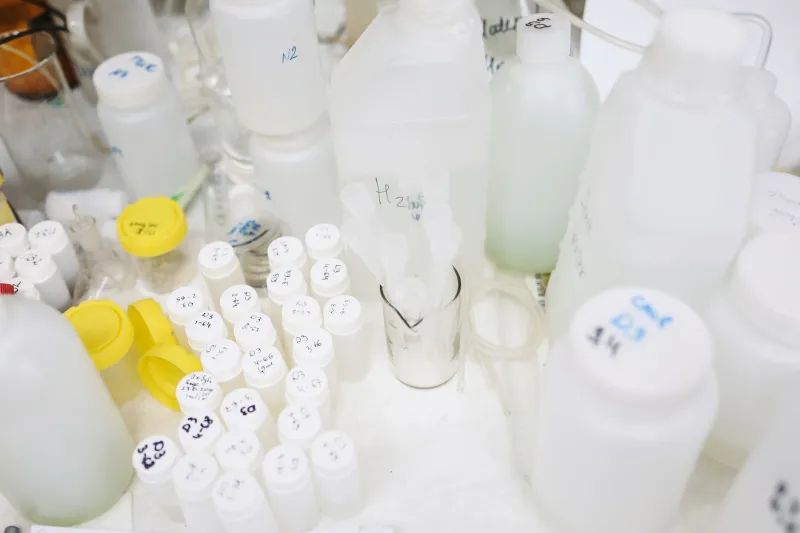
Sampling does not end when the container reaches the laboratory. The lab must take a test portion from the submitted sample. For oils, this may require mixing, warming or dilution. If the submitted sample was not homogeneous, the laboratory's sub-sample may not represent it. Accreditation and method scope matter here, but they do not remove the need for a representative sample in the first place.
A certificate that reports a result to several decimal places can create an impression of precision that the sampling plan does not support. The number looks exact because the instrument is precise. The question is whether the sample was representative enough for that precision to mean anything at batch level.
Practical questions for UK CBD brands
A buyer does not need laboratory training to ask useful questions. The following are reasonable requests:
- What was the sampling plan for this batch, and who carried it out?
- Was the sample taken from bulk material, finished retail units, or a retained reference sample?
- How many increments were taken, and how were they combined?
- Was the batch homogenised before sampling, and how is that recorded?
- Does the certificate apply to the exact variant and container size being sold?
- How is the batch code on the certificate linked to the batch code on the packaging?
- Are retained samples kept, and for how long?
Brands that cannot answer these questions may still sell compliant products. But the absence of answers limits what their certificates can prove.
What a buyer can reasonably conclude
A UK CBD certificate remains a valuable document when its scope is understood. It can show that a sample was tested for particular cannabinoids, contaminants or microbiological markers. It can demonstrate that a laboratory found the sample within a stated specification. It cannot, by itself, prove that every bottle in a production run is identical.
The sampling plan is the bridge between the certificate and the bottle. Where that bridge is documented, the buyer has a clearer basis for confidence. Where it is missing, the certificate should be read as a result about a sample, not a promise about a shelf. That is not cynicism. It is the minimum condition for treating a lab report as evidence.