Batch References and Test Dates: What Turns a Lab Certificate Into Evidence
Walk through the CBD section of any UK retailer, physical or online, and you will meet the same phrase within seconds: lab-tested. It appears on cartons, on product pages, on Instagram captions and sometimes on the dropper itself. It is rarely untrue. It is simply, on its own, almost uninformative. A laboratory report is a record of a measurement made on a specific sample at a specific moment. Strip away the batch reference and the date, and the document stops describing a product and starts describing an idea.
A badge that binds nobody to anything
There is no single UK certification that a lab-tested logo refers to. Third-party analysis is a normal and legitimate part of manufacturing CBD, and many of the laboratories used are accredited by UKAS to ISO/IEC 17025 for particular methods. That accreditation is meaningful: it speaks to how the laboratory works. It says nothing about which product was tested, when the sample was drawn, or whether the bottle on the shelf came from the same production run as the sample in the report.
So the badge is best understood as a statement of intent rather than a finding. Under the Consumer Protection from Unfair Trading Regulations 2008, misleading commercial practices are actionable, but enforcement tends to follow complaints rather than pre-empt them. In practice, the checking falls to the buyer, and it takes two pieces of information to do it.
The batch number is the hinge
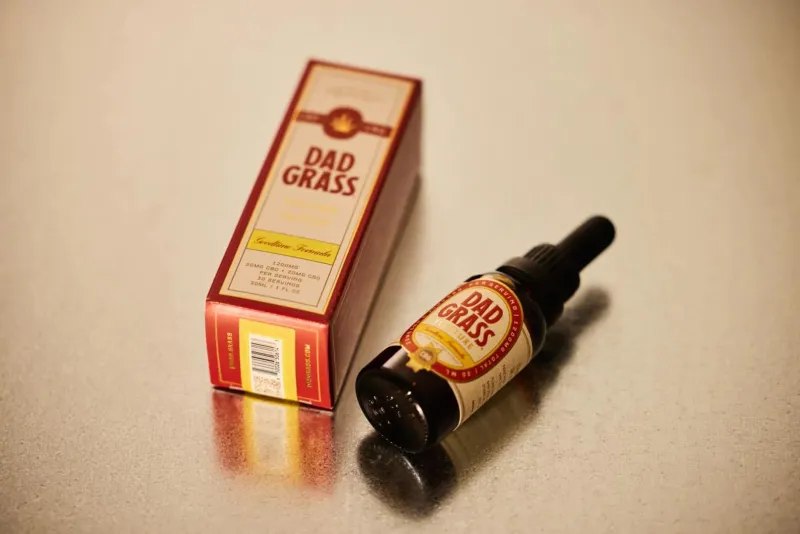
Every serious manufacturer assigns a batch or lot code to each production run. It is usually printed or laser-etched on the outer carton, the base of the bottle, or the label edge, and occasionally on the collar beneath the dropper. That code is the thread that ties a marketing page to a physical object.
A certificate of analysis (COA) that is genuinely batch-specific will normally show the product name as sold, the batch or lot code, the date the sample was received by the laboratory, the date the report was issued, the laboratory's name and accreditation number, and the methods used. The panels should cover more than potency: a cannabinoid profile including CBD, THC and minor cannabinoids, and, where relevant, heavy metals, multi-residue pesticides, residual solvents, microbial contamination and mycotoxins.
Without that batch reference, a COA is a document about a different container. It may be a perfectly honest document. It simply does not answer the question you are asking.
Reading the date rather than merely finding one
Cannabinoids are not chemically static. CBD and THC oxidise over time, and degradation products such as cannabinol accumulate; heat and light accelerate the process. An oil tested eighteen months ago, in packaging with a twelve-month shelf life, may have been accurately described at the time and be less accurately described now. For drops, a report issued within six to twelve months of your purchase is a reasonable expectation, and a shorter window is better.
Two further dates deserve attention. The first is the gap between sample receipt and report issue: a short gap is unremarkable, while a long one may hint at retesting or at a sample that sat on a bench. The second is the manufactured or filled date, which is sometimes printed separately from the best-before date. Outdoor European hemp is harvested in autumn, so a 2026 batch made from 2025 biomass is entirely normal; what matters is when the oil was produced, not when the plant was cut.
A report predating a reformulation is also void as evidence. If a brand changed its extraction method, its carrier oil or its strength, the older certificate describes a product that no longer exists.
Cross-checking, step by step
- Locate the batch code on your packaging and note it exactly, including any letters or slashes.
- Request the COA for that code specifically, rather than accepting a generic download from the brand's laboratory page.
- Confirm the batch code on the certificate matches your pack character for character.
- Check the laboratory name and accreditation number, and whether the methods listed are the methods you would expect for the contaminants of concern.
- Compare the stated cannabinoid content against the label. A 10ml bottle labelled 500mg should show total CBD consistent with 50mg per millilitre; the arithmetic is simple and revealing.
- Note the test date and decide whether it falls within a defensible window.
- Ask what was tested. A report on raw distillate is not a report on the finished oil, and a potency panel alone does not address pesticides or solvents.
Patterns that warrant a second look
- One certificate used across every flavour, strength and bottle size in a range.
- Undated certificates, or ones described as representative of typical production.
- Reports quoting percentages only, with no milligram figures to reconcile against the label.
- Screenshots of PDFs, or images too low in resolution to read the sample identifiers.
- Batch codes that appear nowhere on the packaging.
- Testing carried out by a laboratory with no accreditation and no published methods.
None of these patterns is proof of wrongdoing. Each of them, however, means the buyer is being asked to take the claim on trust rather than to examine it.
A proportionate standard
A full contaminant panel costs a manufacturer several hundred pounds per run, and small UK brands operate on thin margins. It is nonetheless reasonable to expect finished-product testing once per production batch per strength, since a 500mg and a 1000mg oil are different formulations even when they share a bottle design. Brands are sometimes reluctant to share certificates on confidentiality grounds, but batch codes and analytical results are not commercially sensitive; customer names and order details are, and redacting those is straightforward.
What the badge should mean
A lab-tested logo is not worthless. It is a signal that someone, at some point, thought analysis was worth paying for. But a signal is not a record, and the difference matters most in a category where the buyer cannot see, smell or verify the active ingredient. Ask for the batch. Ask for the date. A brand that answers quickly, precisely and without irritation has told you something about its operations that no badge can.