The Carrier Question: How MCT, Olive and Hemp Seed Oil Change What a CBD Drop Delivers

Photo: MCT oil olive oil and hemp seed oil in glass bottles side by side with CBD dropper, via images.squarespace-cdn.com
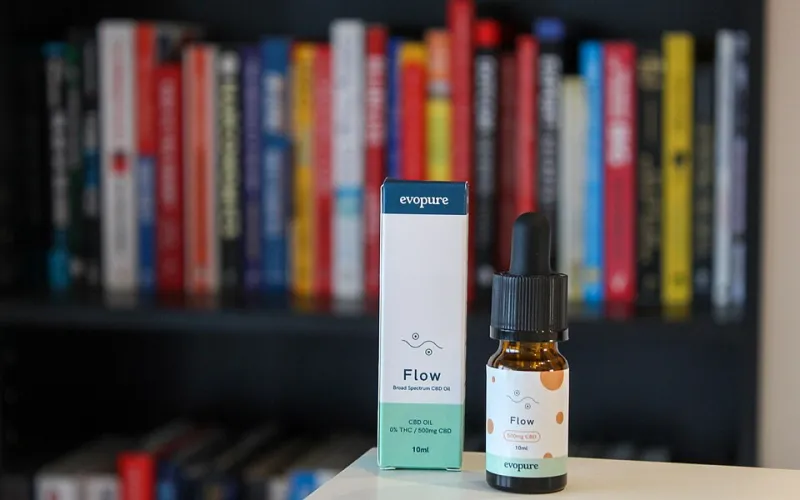
Consider a 10ml bottle of CBD drops containing 500mg of cannabinoids. Ninety-five per cent of what leaves the dropper is something else entirely. That something is the carrier oil, and it is the least discussed and most consequential ingredient on the label after the extract itself.
The carrier is not a neutral passenger
Cannabinoids are lipophilic, meaning they dissolve in fat rather than water. A carrier performs three jobs: it dissolves or suspends the extract, it carries it into the mouth and gut, and it keeps the formulation physically stable for the length of its shelf life. The choice of oil therefore affects how quickly and how completely the CBD is absorbed, how the product tastes and feels, and how long it remains fit for use. In some formulations it also affects how much CBD can realistically be dissolved at all.
MCT oil: the absorption argument, and its limits
Medium-chain triglyceride oil, usually fractionated coconut or palm kernel oil, has become the default in UK CBD drops. It is dominated by caprylic (C8) and capric (C10) acids, which are saturated, resistant to oxidation, liquid at room temperature and almost neutral in taste. That combination makes it an efficient solvent and a stable base, and it explains the frequent claim of faster onset: medium-chain fats are absorbed more directly than long-chain ones.
The caveats are practical rather than dramatic. MCT can cause gastrointestinal discomfort in some people at higher volumes, particularly when taken on an empty stomach. The label rarely states whether the oil derives from coconut or palm, which matters to buyers with sustainability or allergy concerns. And 'MCT' covers a range of blends; a product high in C8 behaves differently from one dominated by C10, though few brands specify.
Olive oil: heritage, polyphenols and a taste that lingers
Extra virgin olive oil brings monounsaturated fat and polyphenols, and it has a long record of safe culinary use. Some formulators argue that it slows gastric emptying and may smooth absorption; others note that its natural flavour is difficult to hide in a sublingual product, where the oil is held under the tongue for a minute or more. Olive oil also has a lower capacity for dissolving cannabinoids than MCT, which caps the concentration a small bottle can realistically deliver. Buyers should also remember that olive oil is itself a frequently adulterated commodity, so a brand selling on its quality ought to be able to say where it sourced it.
Hemp seed oil: a different ingredient entirely
Hemp seed oil is pressed from seeds, not flowers, and contains no meaningful quantity of CBD. It is a pleasant culinary oil, high in polyunsaturated fatty acids, with a pronounced nutty, grassy flavour. Those polyunsaturates make it more prone to oxidation and rancidity than a saturated carrier, particularly once a bottle is opened and stored at room temperature.
The ingredient is not the problem; the implication sometimes is. Because the words 'hemp oil' read as 'cannabis oil' to many shoppers, a formulation built on seed oil can create an impression of botanical richness that the cannabinoid content does not support. A full-spectrum product requires an extracted resin or distillate; seed oil contributes flavour and a lower cost base, not potency.
The arithmetic that exposes a formulation
Strength is expressed in milligrams, and the useful figure is milligrams per millilitre. A 10ml bottle containing 500mg delivers 50mg per millilitre; to take 25mg you draw half a millilitre. A 30ml bottle containing 300mg delivers 10mg per millilitre, which means swallowing two and a half millilitres of carrier to reach the same dose. Neither product is dishonest, but the second asks rather more of your digestion and your palate.
Price per 100mg is the fairest way to compare across bottle sizes. Droplet size deserves similar scrutiny: a 'drop' is not a standardised unit and typically falls between 0.03ml and 0.05ml, with thicker oils producing larger droplets. Any claim of an exact milligram amount per drop should be treated as approximate unless the brand has measured it.
Oxidation, packaging and the life of a bottle
Saturated carriers resist oxygen well; polyunsaturated ones do not. Amber or violet glass, a tight dropper seal and a modest headspace all slow deterioration. Oils based on olive or hemp seed benefit from cool, dark storage and, once opened, from the refrigerator. Rancidity announces itself through a smell of old nuts or crayons, and no extract quality survives a spoiled carrier.
When the carrier is doing the persuading
Several patterns are worth watching for in UK retail:
- Heavy flavouring, such as peppermint or citrus, used to cover the taste of a harsh or poorly refined extract.
- Large bottle volumes paired with modest milligram totals, so the carrier load per dose becomes substantial.
- Hemp seed oil listed first while the cannabinoid content sits modestly further down.
- A cloudy or gritty appearance, which may indicate incomplete dissolution rather than botanical character.
- Softgel capsules whose carrier and fillers, often olive oil or MCT plus silicon dioxide, go unmentioned on the label.
A label checklist
- Read the ingredient list in order; the first named oil is the bulk of the product.
- Confirm both the total milligrams and the bottle size, then calculate milligrams per millilitre.
- Check whether the carrier is named specifically or obscured behind 'vegetable oil'.
- Establish the spectrum: isolate, broad-spectrum or full-spectrum, with the extract listed as an ingredient.
- Look for a batch number and a matching certificate of analysis.
- Compare price per 100mg rather than the headline bottle price.
- Note the best-before date and any guidance on storage after opening.
Read the second ingredient first
On a CBD label, the first ingredient tells you what you are mostly buying, and after the extract that is the carrier. A clear, well-chosen carrier does quiet, effective work and asks for no credit. One that is thick, strongly flavoured or present in volume is often compensating for something. Reading that line critically, before the strength claim or the badge above it, is one of the simplest forms of quality control available to a UK buyer.