The Average in the Bag: Why a CBD Gummy Certificate Cannot Vouch for the Sweet You Eat
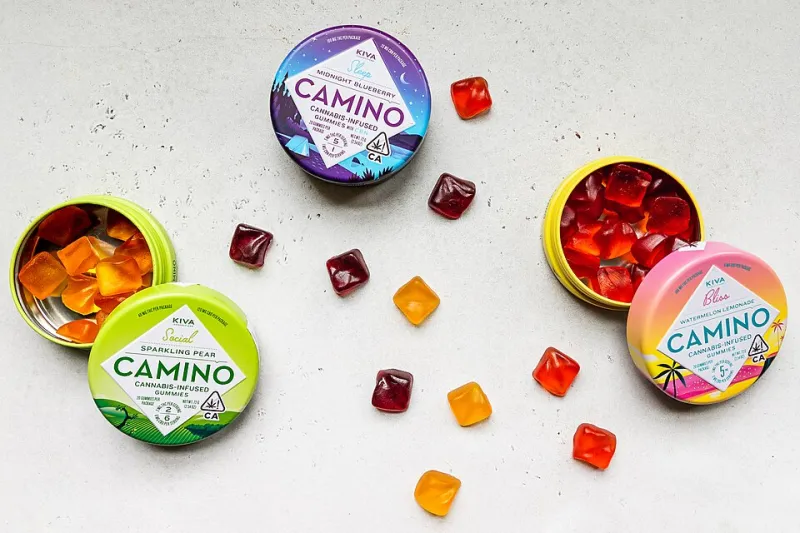
Photo: elsaolofsson, CC BY 2.0, via Wikimedia Commons
A tub of CBD gummies carries a single potency figure on the front of the pack. In the United Kingdom that figure is normally expressed per sweet: 10mg, 25mg, occasionally 50mg. It reads like a specification. It is better understood as an average, and the distinction matters more for an edible than for almost any other CBD format on the shelf.
Two tubs can leave the same production run carrying identical labels. In the first, every gummy sits within a narrow band around the declared figure. In the second, the mean is unchanged but individual sweets range from roughly half the stated dose to more than double it. Both tubs can be supported by a genuine certificate of analysis, issued by a laboratory with a credible scope of accreditation. Neither the label nor the certificate, as commonly published, will tell a buyer which of the two they have bought.
That is the homogeneity gap. It is not a story about dishonest brands, although some will exploit it. It is a story about the difference between a measurement and a guarantee.
A pooled result describes a sample, not a spread
The standard route to an edible certificate is composite sampling. The laboratory receives a handful of units, weighs them, homogenises them into a single blended mass, and assays that mass once by HPLC. The figure that returns is an accurate measurement of the material in the tube. It says nothing about how the cannabinoid was distributed across the pieces that went into it.
This is not a criticism of the laboratory. A composite result is a legitimate and economical way to establish the mean content of a batch. The error arises when that single number is presented, implicitly or explicitly, as though it also demonstrated uniformity. A mean has no variance. You cannot read a spread from a figure that has already been averaged.
Consider two production batches, both of which return 10mg per unit on a composite assay. In batch one the individual sweets run from 9mg to 11mg. In batch two they run from 4mg to 18mg. The certificate is identical in both cases. The consumer experience is not.
Why a gummy is an unusually difficult matrix
Oils are comparatively straightforward. A cannabinoid dissolved in MCT is in a single phase, and a well-mixed bottle is reasonably consistent from drop to drop, subject to the settling and separation issues that affect all emulsions. A gummy is a different problem altogether.
The cannabinoid is fat-soluble. The gel body is water-based. Getting one evenly dispersed through the other requires an emulsifier, adequate shear, and controlled temperatures during depositing. Once the warm mix is dosed into moulds, the disperse phase can migrate before the gel sets. Pieces deposited early in a run and pieces deposited late are not necessarily subject to identical conditions. Add a coating, a sugar sanding or a flavoured drizzle and you have introduced further variables that a homogenised sample will quietly blend away.
Nor is a single gummy necessarily uniform within itself. The centre and the outer edge may differ. A coated piece may carry a meaningful proportion of its cannabinoid in the coating. And the material continues to change after packing: cannabinoids and fats can migrate within a soft gel over months of shelf life, particularly in a warm flat or a delivery van in July. A certificate written at release does not describe the sweet eaten in the following spring.
What a real homogeneity claim would require
A brand that genuinely wanted to speak to uniformity would need to publish rather more than a potency figure. The minimum evidential set looks like this.
- Individual unit assays. Each tested piece analysed separately, not blended. The output is a list of results, one per unit.
- A stated sampling plan. How many units, drawn from where, and when in the run. Ten pieces pulled from a single retail tub answer a different question from thirty pieces pulled across the start, middle and end of a production shift.
- Dispersion statistics. Mean, standard deviation and relative standard deviation, together with the minimum and maximum observed values.
- Acceptance criteria set in advance. A limit such as a relative standard deviation of 10% or less, or every unit within plus or minus 15% of the declared figure, chosen before the test rather than after the results arrive.
- A link to the retail batch. The unit tested should be traceable to the batch code printed on the pack, with a test date after production rather than before it.
A certificate that reports 10mg per gummy without a spread has not tested homogeneity. It has tested an average and labelled it as a specification.
Where the rules stop short
UK food law requires that labelling is accurate and not misleading, and the same principle applies to a voluntary potency claim as to any other. CBD edibles also sit within the novel food regime, where a product's place on the Food Standards Agency public list rests on an assessment that assumed a particular intake. If individual units vary widely, that assumption becomes harder to defend, although no provision of the regime explicitly demands per-unit uniformity data.
There is a useful analogy in the Weights and Measures (Packaged Goods) Regulations, which permit an average-based system for prepacked goods with a tolerance for individual packs falling below the nominal quantity. The CBD milligram figure is not a quantity regulated in that way, and it would be wrong to suggest otherwise. But the underlying logic is instructive: average compliance has always tolerated individual variation, and buyers who assume otherwise are reading more into a number than the system promises.
Five questions worth putting to an edible brand
An email to customer services will usually settle the matter faster than any amount of label reading.
- Was the certificate produced from blended units or from individually assayed pieces?
- How many units were tested, and were they taken from a retail pack or from the production stream?
- Does the report state a standard deviation, a relative standard deviation or a range?
- Were acceptance criteria agreed with the laboratory before testing began?
- Does the batch code on the report match the code on the pack you are holding?
A brand that answers all five without hesitation, and can supply the underlying report, is demonstrating something a potency headline never can.
What a credible answer sounds like
A satisfactory response is specific and slightly unglamorous. It names a number of units. It quotes a relative standard deviation and a range. It explains where in the run the samples came from. It may even concede that a particular flavour is harder to dose evenly than another, which is a more reassuring answer than a claim of perfect consistency across every SKU.
A weak response is a link to a pooled potency certificate and a sentence about quality. That is not dishonesty. It is simply an answer to a different question from the one a buyer is entitled to ask.
The practical rule
Treat every per-sweet potency figure as a claim about a batch mean until someone shows you the individual results. The certificate on the website may well be authentic, the laboratory may well be competent, and the average may well be accurate. None of that closes the gap between the average and the sweet in your hand. In a category where dose control is the entire point of buying a measured edible rather than an oil, that gap deserves to be named.