Clinical Language, Consumer Product: What 'Pharmaceutical-Grade' Cannot Mean on a UK CBD Label
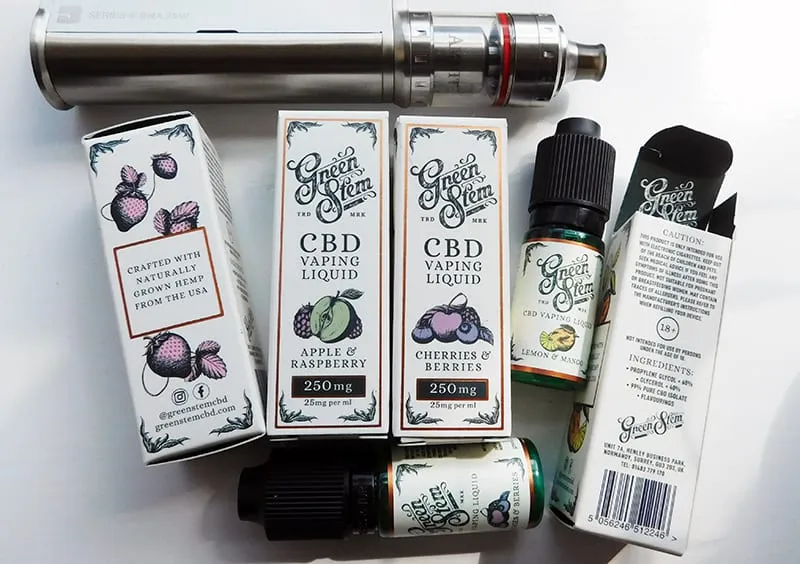
Photo: Ecig Click, CC BY-SA 2.0, via Wikimedia Commons
On a UK CBD label, few phrases work harder than 'pharmaceutical-grade'. It suggests precision, oversight and a standard beyond the ordinary supplement shelf. It is also a phrase that can mean very little unless the reader knows what noun it is modifying and which evidence sits behind it. At CBD Purist, the useful question is not whether the wording sounds clinical. It is whether the claim can be tied to a specification, a manufacturing control and a regulatory status that a buyer can verify.
A phrase with no single legal meaning
In UK law, 'medical-grade' is not a defined category that a CBD brand can simply adopt. 'Pharmaceutical-grade' is sometimes used for materials that meet a pharmacopoeial monograph, such as an excipient or an active substance produced to a recognised standard. That is a meaningful idea at the level of an ingredient. It does not automatically describe the finished oil in the bottle, the site where it was filled, or the legal status of the product.
The distinction matters because CBD products on the UK market occupy different regulatory spaces. A product authorised as a medicine by the MHRA is in one category. A CBD oil sold as a food supplement is in another, and is subject to the Novel Food regime administered by the Food Standards Agency. A cosmetic or vape product sits elsewhere again. A brand may use advanced manufacturing, but the vocabulary on the label cannot move a product from one category to another. In 2026, that remains a legal and regulatory question, not a matter of tone.
What the words would have to attach to
A serious use of 'pharmaceutical-grade' would need to identify its object. Is the claim about the CBD isolate or distillate? The carrier oil? The finished batch? The filling line? The clean-room in which the bottle was handled? Each answer requires different evidence.
If the claim is about a clean-room, a buyer should expect a classification under a recognised standard such as ISO 14644, together with environmental monitoring records: particle counts, pressure differentials, temperature and humidity logs, cleaning schedules and gowning procedures. A photograph of a stainless-steel bench is not a clean-room classification. Nor is a certificate from a laboratory that tested a sample elsewhere.
If the claim is about manufacturing, the relevant evidence is a batch manufacturing record and a release decision against a written specification. For a licensed medicine, that release would sit within a pharmaceutical quality system and involve a Qualified Person. For a food supplement, the controls may still be rigorous, but they are not the same legal architecture. A GMP certificate should state the site and the scope of activity it covers. A logo on a website does not do that work.
If the claim is about the ingredient, the specification should point to a defined standard: a British Pharmacopoeia or European Pharmacopoeia monograph where one exists, a validated analytical method, and a certificate of analysis that states the method and the limit tested. Even then, the certificate describes the sample. It does not describe the whole manufacturing system.
Why a laboratory certificate cannot carry the claim
A certificate of analysis is valuable. It can show cannabinoid content, solvent residues, heavy metals, pesticides or microbiology against stated limits. It can reveal whether a batch was tested at all. But it is a record of analysis, not a licence. It does not establish that the site operates under GMP, that the clean-room is classified and monitored, that the product is authorised as a medicine, or that the brand has the right to use the word 'pharmaceutical' in a medicinal sense.
This is where clinical language often outruns evidence. A brand may publish a clean certificate and a polished sentence about 'medical-grade extraction'. The certificate may be genuine. The sentence may still be doing work that no certificate can support. The buyer is being invited to infer a manufacturing and regulatory status from an analytical result. That inference is not safe.
A practical checklist for UK buyers
-
Identify the noun. Ask what 'pharmaceutical-grade' or 'medical-grade' is meant to describe: ingredient, batch, facility, or product. If the brand cannot answer precisely, treat the phrase as marketing shorthand.
-
Check the legal status first. Is the product presented as a food supplement, a cosmetic, a vape, or a medicine? Does the label make medicinal claims? A product that is not authorised as a medicine should not imply that it is one.
-
Request the GMP evidence. Look for a certificate that names the manufacturing site and the scope of operations. Check whether the activities described match the product you are buying.
-
Ask for clean-room evidence if clean-room claims are made. A classification, monitoring records and standard operating procedures are more informative than a photograph or a phrase.
-
Read the specification, not just the result. A certificate should state the limit, the method and the batch. A result without a specification is a number without a rule.
-
Look for release and stability records. Who released the batch, against what criteria, and what evidence supports the shelf-life on the label? These questions sit behind the certificate, not on its face.
-
Check consistency across batches. A single impressive certificate is weaker than a pattern of batch records, test dates and specifications that hold over time.
-
Separate purity from status. A clean batch can still be an unlicensed product. Purity testing and medicinal authorisation are different questions with different evidence.
The claim that cannot be tested into truth
No laboratory certificate can turn an unlicensed CBD product into a medicine. That is the central audit point. A certificate can support a purity claim; it cannot confer a regulatory category. A clean-room classification can support a manufacturing claim; it cannot make a food supplement into a pharmaceutical product. A pharmacopoeial monograph can specify an ingredient; it cannot authorise a finished oil.
For UK buyers, the discipline is to read clinical language as a request for evidence rather than a substitute for it. 'Pharmaceutical-grade' may be a legitimate description of a material or a process. It is not a certificate, and it is not a legal status. The brand that understands the difference should be able to show the documents that prove which one it means.