The Date on the Bottle and the Study Behind It: Auditing CBD Shelf-Life Claims in the UK
A date with no visible working
Pick up almost any CBD oil sold in the UK and you will find a best-before date printed on the bottle or carton. It may be eighteen months from manufacture, two years, or something in between. What you will rarely find is an explanation of how that date was set. The brand's website may host a batch certificate showing cannabinoid potency, perhaps a pesticide panel and a heavy metals screen. None of those documents explains why the oil in your hand is considered fit for sale until a particular month in 2028.
That is not to say the date is arbitrary. It may rest on a well-designed stability programme. But from the buyer's side, the reasoning is invisible. A best-before date is a forecast, and forecasts can be more or less well founded. The purpose of this article is to explain what a stability study would need to show, and to give UK buyers a short set of questions that turn the date from a decoration into a claim the brand can either support or cannot.
What a stability study is actually for
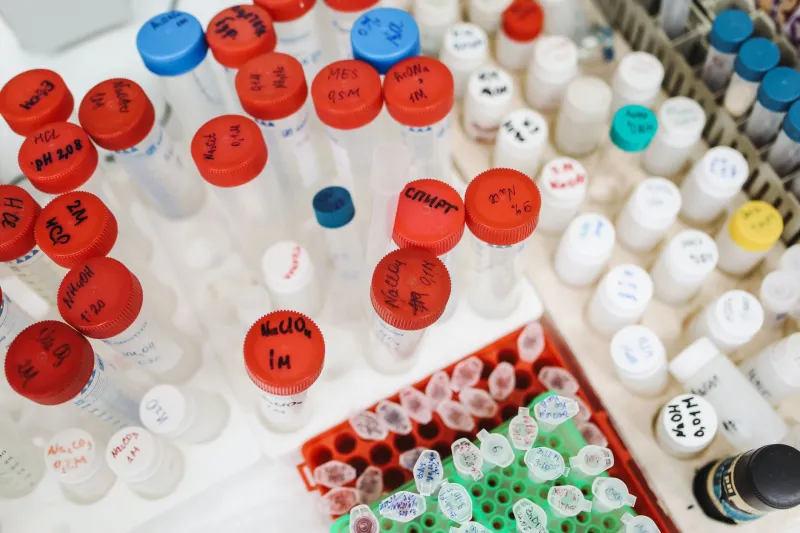
Stability testing is a structured programme in which samples of a finished product are stored under controlled conditions and tested at set intervals. For a CBD oil, the attributes worth tracking are not limited to CBD content. A serious study will follow cannabinoid potency across the shelf life, including minor cannabinoids where relevant. It will watch for degradation products, most commonly cannabinol, or CBN, which can form as CBD oxidises over time. It will examine preservative efficacy in multi-use products, microbial limits, appearance, and compatibility with the packaging.
These attributes do not drift at the same rate. CBD potency may decline slowly in a well-formulated oil while CBN creeps upward. A preservative system may pass a challenge test at manufacture but lose effectiveness after repeated opening. An emulsion may separate. A plastic bottle may allow more oxygen ingress than glass. A single expiry date compresses all of these different clocks into one number, which is why the underlying study matters more than the number itself.
Accelerated and real-time protocols answer different questions
Stability work generally falls into two broad categories. Accelerated testing stores product at elevated temperature and humidity, often around 40°C and 75% relative humidity, for a shorter period. The results are used to predict how the product might behave over a longer shelf life at normal conditions. Real-time testing stores product at its intended conditions, typically UK ambient temperature, for the full proposed shelf life. Only real-time data can confirm that a date is achievable in practice.
Accelerated studies are useful for early formulation decisions and for flagging obvious weaknesses. They are not a substitute for real-time confirmation. A CBD oil is a complex matrix of carrier oil, cannabinoids, possibly terpenes and flavourings, and packaging. Heat and humidity can create degradation pathways that would not occur at the same rate on a UK shop shelf. A brand that sets a two-year date on accelerated data alone is making an educated forecast, not a demonstrated claim. A brand that uses accelerated work to assign a provisional date and then confirms it with real-time data is doing something more defensible.
The opened bottle is a different product
Most stability studies test sealed containers. That is useful, but it does not describe what happens after the cap comes off. Once a dropper bottle is opened, oxygen enters, light exposure increases, and the dropper itself can introduce contamination if handled carelessly. For multi-use oils, preservative efficacy is not a minor detail. It is part of what keeps the product within specification during use.
Some brands print a second instruction, such as a recommendation to use the oil within a certain number of months of opening. That is a more honest way of separating sealed shelf life from in-use shelf life. If no such guidance appears, the buyer is left to assume the best-before date covers both. It may not. Storage advice matters too: a bottle kept in a warm bathroom cabinet is not living the same life as one kept in a cool, dark cupboard.
What a batch certificate dated months ago can and cannot tell you
Suppose the batch certificate was issued in March 2026 and you buy the bottle in November 2026. The certificate tells you that the batch met its specification at the point of testing. It does not tell you that the oil still meets that specification eight months later, and it certainly does not prove that it will meet it at the end of the printed shelf life. The certificate is a snapshot. The stability study is the time-lapse.
This is not a reason to dismiss batch certificates. A recent certificate linked to your batch is valuable evidence. But it should be read alongside the shelf-life claim. If a brand asserts a long best-before date, the question is whether it holds stability data covering that interval in the same packaging and under the same storage conditions. Buyers do not need the full dossier. They need to know that it exists and that the date was not chosen for convenience.
Six questions that turn a date into a claim
- Is the best-before date based on real-time stability data, accelerated data, or both? If only accelerated, is a real-time study underway or complete?
- Which attributes were tracked? Potency alone is thin. Look for CBN, preservative efficacy, microbial limits, and appearance.
- Was the study run in the same packaging that reaches the shelf? Glass and plastic are not interchangeable.
- Does the date apply to the sealed bottle, the opened bottle, or both? Is there separate in-use guidance?
- What storage conditions were used, and do they match normal UK domestic storage?
- Can the brand link the date to a specific batch and a stability report, even if only as a summary?
What a buyer can reasonably conclude
A best-before date is not meaningless. It is a claim about future performance, and in a sector where lab reports are increasingly expected, it deserves a similar level of transparency. If a brand can answer the questions above, the date becomes evidence. If it cannot, the date should be treated as a forecast without visible working. In 2026, UK CBD buyers have learned to read certificates closely. The next step is reading the clock behind them.