A Percentage Without a Subject: Why '99% Pure Isolate' Cannot Vouch for a CBD Oil

Photo: CBD isolate powder laboratory certificate dropper bottle UK product, via i.pinimg.com
Walk through the CBD shelves of a UK health shop or scroll a British brand's product page and you will meet the same phrase in several forms: 99% pure CBD isolate. It appears on oils, capsules, balms and powders, often beside a laboratory certificate. The figure sounds definitive. It is not, at least not in the way most shoppers read it. A purity percentage can be a true statement about a raw material while remaining a poor description of the finished product. The useful question is not whether 99% is impressive, but what exactly was measured, on which sample, and at what stage of manufacture.
What the percentage is actually measuring
CBD isolate is a refined hemp extract composed predominantly of cannabidiol. In commerce, the headline purity figure usually refers to the assay of that raw material: the proportion of the sampled powder that is CBD, as measured by a named analytical method, commonly HPLC. A certificate may report total CBD by mass and show minor cannabinoids at low or non-detectable levels.
That is a meaningful piece of information about the powder. It is not a complete definition of purity. A 99% cannabinoid assay does not, by itself, tell you that residual solvents, heavy metals, pesticides or microbiological contaminants have been tested and passed. Those are separate panels with separate limits of detection. Nor does it tell you whether the powder has been stored correctly, whether it has been blended evenly, or whether the finished oil has been tested at all. Purity is not one number; it is a set of findings tied to a sample.
UK buyers should also notice the ambiguity in the phrase itself. Does 99% mean 99% of the powder is CBD? Does it mean 99% of the cannabinoid content is CBD, with 1% made up of other cannabinoids? Does it refer to a raw-material lot that was purchased months before the bottle was filled? A brand that cannot answer those questions is using a percentage as atmosphere rather than evidence.
The dilution step that changes the claim
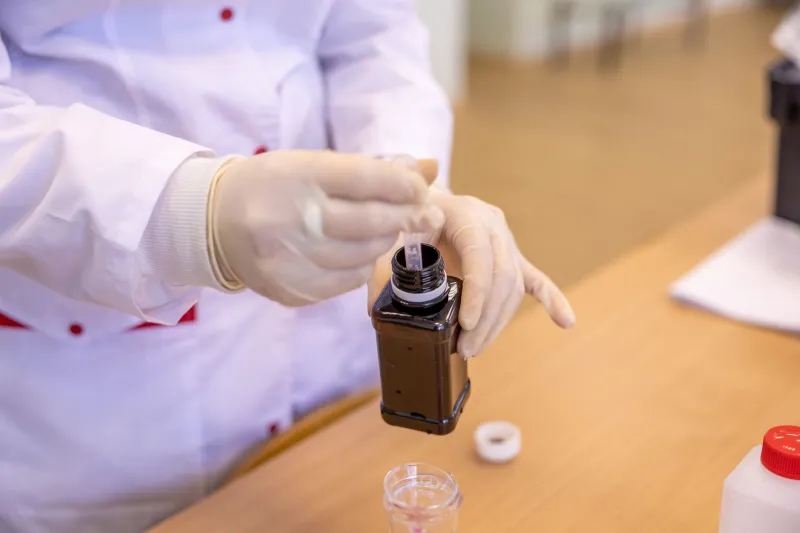
A CBD oil is not isolate. It is a formulation: isolate dispersed in a carrier oil, usually MCT, olive oil or hemp seed oil, and sold in a bottle with a stated total CBD content. The concentration that matters to the buyer is the amount of CBD in the bottle and, if serving guidance is given, the amount per drop or millilitre.
This is where the 99% figure can mislead by association. A bottle may contain 500 mg or 1,000 mg of CBD in 10 ml or 30 ml of carrier. Those numbers describe the finished oil's potency, not the purity of the isolate used to make it. A product made with a 99% isolate can still be a low-concentration oil, because only a small proportion of the formulation is isolate. Conversely, a product made with a less refined extract can deliver a higher milligram count per millilitre. Neither fact, on its own, establishes quality.
The arithmetic is simple enough to check. If a 10 ml bottle states 500 mg of CBD, that is 50 mg per ml. If a 30 ml bottle states 1,500 mg, that is also 50 mg per ml. The isolate's 99% assay does not enter that calculation. It belongs to the ingredient specification, not the dose in the dropper. UK labels should make the total CBD content and bottle volume clear; where they do not, the buyer cannot verify the concentration without a finished-product certificate.
Why a raw-material certificate cannot certify the bottle
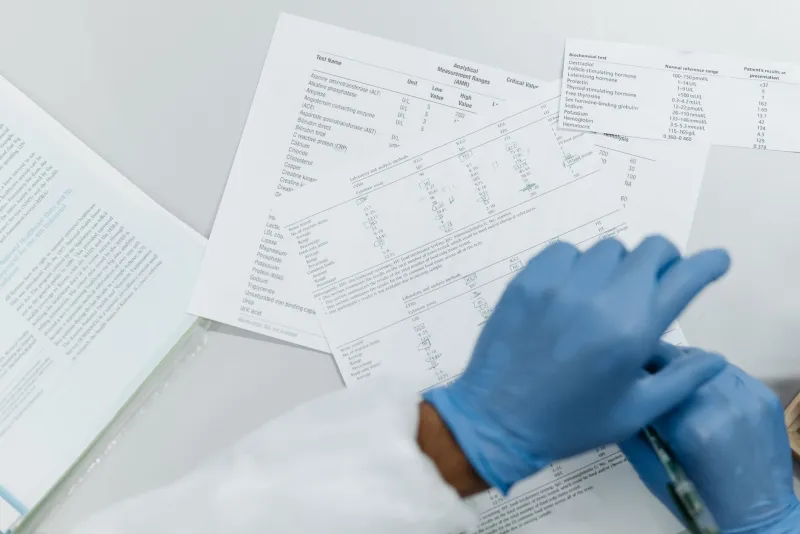
A certificate of analysis for isolate is not interchangeable with a certificate for the oil. The former may identify a lot of powder, state the analytical method and report a cannabinoid assay. The latter should identify the finished batch, the product as sold, and the results of testing that product. The difference is not pedantic. Mixing, heating, carrier choice, filling, storage and packaging can all affect what ends up in the bottle.
A brand may legitimately provide both documents. The isolate certificate supports the identity of an input; the finished-product certificate supports the batch on the shelf. What a buyer should resist is a product page that displays a raw-material certificate as though it were a product certificate. The link between the two needs to be traceable: an isolate lot reference, a manufacturing date, a finished batch number and a test date that post-dates production. Without that chain, the 99% figure floats free of the bottle in your hand.
Reading isolate purity on a UK COA
When an isolate certificate is presented, read it as a laboratory record rather than a badge. Check the sample description and lot number. Check the test date and whether it is current for the batch being sold. Check the method: HPLC and GC are not interchangeable labels, and the method should be stated. Look at the result units and the limit of quantification. A minor cannabinoid reported as not detected is only as informative as the limit below which the laboratory could not measure it.
Then ask what the 99% refers to. If the certificate reports total CBD at 99% by mass, the remaining 1% should be accounted for in the panel or acknowledged as untested. If the marketing claim is 99% pure but the certificate shows a lower assay, the discrepancy needs an explanation. If the certificate is for a white-label isolate supplied to several brands, it may still be genuine; it simply does not prove that the finished oil was made with that lot or tested after formulation.
What to verify before treating 99% as a quality claim
A UK buyer does not need a laboratory background to ask better questions. Start with the finished-product certificate: does it match the batch number on the packaging, and is the test date recent enough to represent the stock being sold? Does it report CBD potency in a way that matches the label's milligram claim? Does it include the contaminant panels the brand invokes, with detectable limits stated?
Next, separate the claims. Isolate purity is a raw-material claim. Carrier dilution is a formulation fact. Potency is a finished-product measurement. Contaminant testing is a separate set of findings. Novel Food status is a regulatory matter, not a purity result. A brand that keeps these categories distinct is easier to audit than one that lets a single percentage do all the work.
Finally, treat 99% as a starting point rather than a conclusion. It may be an accurate assay of a well-refined powder. It may sit alongside a thorough finished-product certificate and a transparent batch system. But the number cannot travel from the powder to the bottle by implication. The buyer's task is to follow the evidence across that gap, and to accept that a purity claim without a subject, a sample and a date is not yet a product-quality claim.